
From Texas to Colombia to Hong Kong: How Advanced Patient Handling is Reshaping Clinical Workflows
In the intricate world of radiation oncology and interventional radiology, the journey a clinician takes with their patient is rarely static. It involves careful planning for movement between imaging suites, treatment rooms, and recovery areas. The challenge has always been maintaining the precision of the treatment plan while physically moving the patient. This is more than a logistical hurdle; it is a critical component of care that impacts clinical outcomes and patient comfort.
As treatment modalities become more sophisticated—integrating MRI guidance into interventional procedures, adaptive planning, and proton therapy—the need for a seamless bridge between these technologies grows. Clinicians across the globe are finding that the solution often lies in how they handle the transfer process itself. By utilizing Symphony systems, medical teams are discovering new ways to enhance stability and from the high-tech corridors of German research centers to busy public hospitals in Colombia, this article uncovers how optimized patient transfer is making a tangible difference in cancer care worldwide.
United States: Bridging the Gap in Complex Brachytherapy
In Houston, Texas, a radiation oncology team faces the daily challenge of managing complex gynecological and genitourinary brachytherapy workflows. These procedures are becoming increasingly delicate, often involving a mix of solid applicators and needles. The margin for error is incredibly small, and maintaining the exact position of these applicators during transfer is paramount for effective treatment.
The Challenge of Multi-Modality Imaging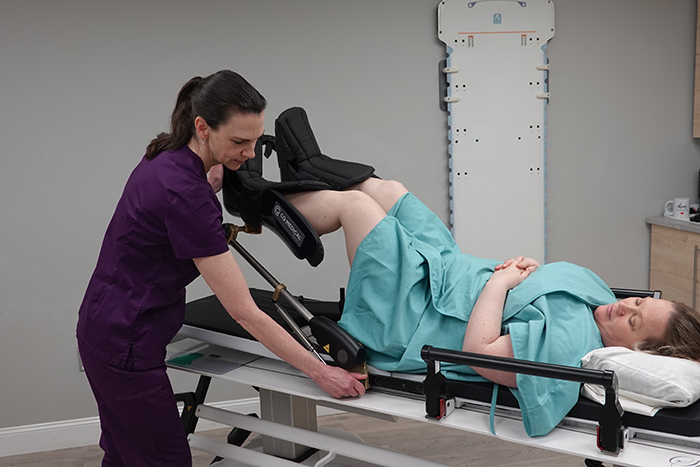
Modern brachytherapy often requires moving a patient from a CT scanner to an MRI suite to obtain superior soft-tissue imaging. In many facilities, these rooms are not adjacent, requiring transport down hallways or between floors. Historically, this involved transferring patients using sheets—a labor-intensive process that required multiple staff members and carried a risk of shifting the internal applicators.
The Clinical Solution
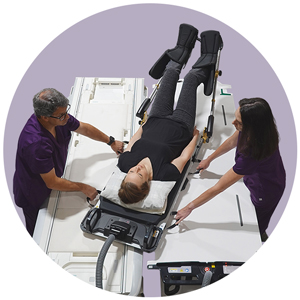
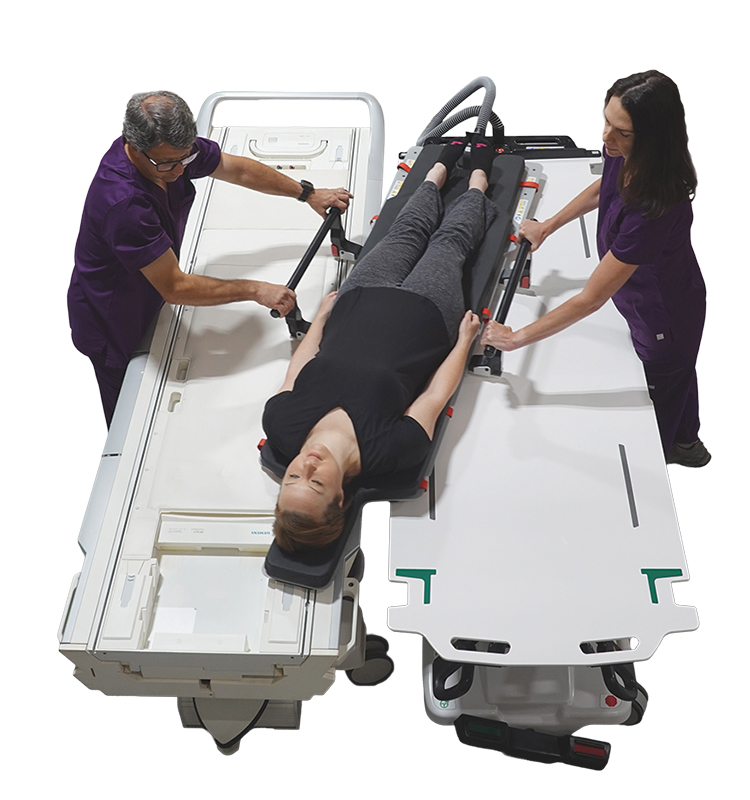
By implementing a specialized transfer workflow, the team in Texas has significantly refined this process. Using the Lithotomy AirShuttle transfer system, staff can now move patients from the insertion room to CT, and then onto an MRI scanner without physically lifting the patient or disturbing the treatment setup.
The clinical benefits observed include:
- Enhanced Stability: The applicator position remains consistent relative to the patient’s anatomy, validating the treatment plan.
- Staff Efficiency: What used to be a cumbersome task requiring extra hands is now a smooth slide that two staff members can manage with ease.
- Future-Forward: As the industry moves toward MRI as a primary imaging modality, having a transfer system that is MR-conditional ensures the clinic is ready for the next generation of image-guided therapy.
Germany: Pushing the Boundaries of Adaptive Radiotherapy and Interventional Radiology
The German Cancer Research Center (DKFZ) is pioneering work in Online Adaptive Radiotherapy (oART). This approach allows clinicians to adapt the treatment plan while the patient is on the table, accounting for daily anatomical changes like weight loss or bladder filling.
Integrating Intelligence and Imaging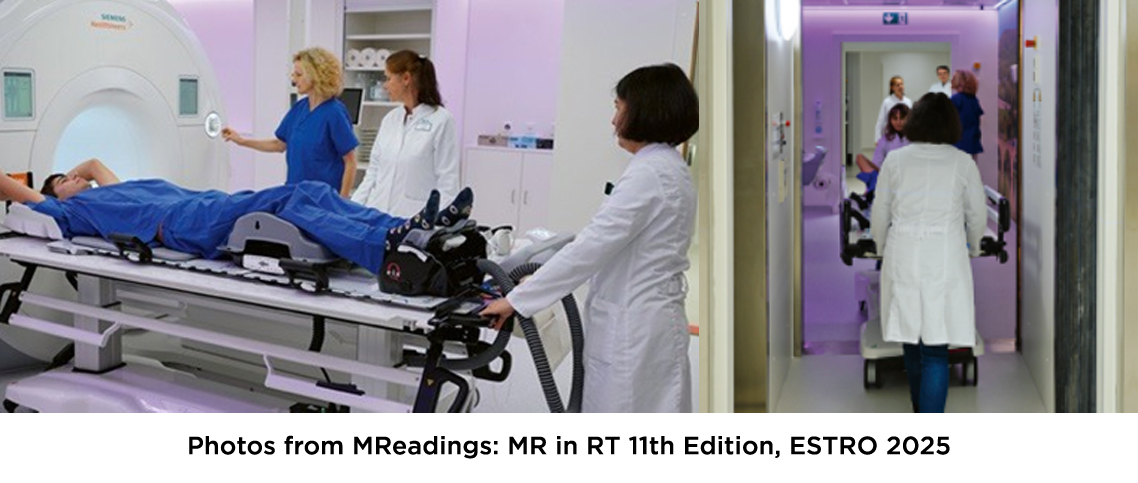
The team at DKFZ utilizes an AI-aided radiotherapy system to streamline workflows. However, while the system’s cone-beam CT (CBCT) is efficient, it lacks the high soft-tissue contrast of an MRI. To solve this, they established a "Modular Adaptive Radiotherapy System" (MARS).
By connecting their adaptive radiotherapy system to a high-field 3T MRI scanner using the Symphony transfer system, they created a powerful hybrid workflow. Patients are shuttled in the treatment position from the MRI directly to the linear accelerator. This integration allows clinicians to re-contour tumors with the clarity of MRI data and assess functional imaging for early response, all while keeping the workflow efficient enough for daily treatment.
Hannover, Germany: Precision and Comfort in Interventional Radiology
While research centers focus on adaptive radiotherapy, clinical teams in Hannover are applying the same transfer logic to interventional radiology (IR). Here, the use of the Iris AirShuttle is proving that technical precision and patient comfort are deeply intertwined, particularly during complex diagnostic and therapeutic procedures.
Lymphangiography: The Link Between Comfort and Compliance
Lymphangiography—is a notoriously meticulous procedure that requires the patient to remain perfectly still for extended periods. In Hannover, this is often performed without the use of general anesthesiology.
In this setting, the patient’s physical comfort is not just a matter of bedside manner; it is a clinical requirement. A patient who is uncomfortable will inevitably shift, creating motion artifacts that can compromise the delicate mapping of lymph vessels. By using the AirShuttle, the clinical team can transition the patient smoothly between imaging modalities to minimize discomfort and movement. This stability allows for high-fidelity imaging without the risks or recovery time associated with sedation.
Liver Tumor Biopsy: Intra-bore Precision
The benefits of advanced transfer extend into the oncology suite for liver tumor biopsies. The Hannover team expresses that precision is the primary challenge here; hitting a small target within a vascular organ requires micro-adjustments.
The AirShuttle provides a unique advantage by allowing for intra-bore adjustment. Rather than having to completely remove the patient from the CT or MRI bore to recalibrate the needle path, the air-assisted system allows clinicians to make fine-tuned longitudinal or lateral adjustments while the patient remains in the imaging environment. This capability:
- Reduces Procedure Time: Minimizes the "in-and-out" cycling of the imaging table.
- Increases Accuracy: Allows for real-time verification of the biopsy needle's trajectory relative to the lesion.
By integrating the AirShuttle into these IR workflows, Hannover is demonstrating that when we remove the physical friction of moving a patient, we also remove the technical friction of the procedure itself.
Hong Kong: Efficiency in the Proton Vault
In Hong Kong, the focus shifts to maximizing the utility of high-value resources like proton therapy. The local clinical team has implemented a seamless integration of MRI with proton therapy for prostate Stereotactic Body Proton Therapy (SBPT).
Maximizing Throughput and Precision 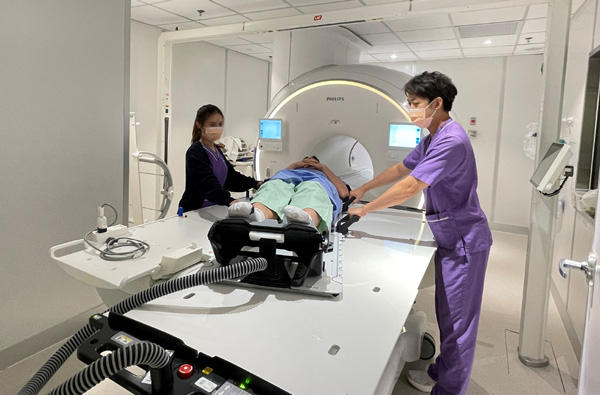
Proton therapy requires immense precision, and minimizing patient movement is critical. By using a specialized air-transfer shuttle, the center has achieved remarkable stability, recording less than 2.5mm of patient movement during the entire workflow.
Beyond stability, the operational impact has been significant. The streamlined transfer process has resulted in a 33% increase in patient throughput. This efficiency gain allows the center to treat one additional patient per day—a vital improvement in a region where access to such advanced care is in high demand. It serves as a replicable model for centers worldwide seeking to maximize machine utilization without compromising on the quality of care.
Colombia: Ergonomics in High-Volume Care
In Bogota, Colombia, the clinical context differs but the need for reliable transfer remains just as urgent. At a major public institution, the radiotherapy department manages a high volume of patients, treating approximately 20 brachytherapy cases per month with multiple sessions each.
Safety for Patients and Staff
Procedures here are often performed under anesthesia, meaning patients cannot assist in their own movement. After the applicator is inserted, the patient must be transferred to a CT scanner located 10 meters away, and then to a recovery room.
For the clinical team in Bogota, the Symphony system has solved critical ergonomic and safety challenges:
- Reproducibility: The system ensures that the applicator does not displace during the move to CT, providing reliable 3D images for planning.
- Ergonomics: It significantly reduces the physical effort required by staff to move anesthetized patients, helping to prevent workplace injuries.
- Patient Dignity and Comfort: The smooth transfer protects the patient from abrupt movements or discomfort, which is especially important when internal applicators are in place.
The Universal Language of Care
While the specific applications vary—from cutting-edge adaptive research in Germany to high-throughput proton therapy in Hong Kong and essential brachytherapy in the Americas—the core clinical benefits of optimized patient transfer are universal.
1. Uncompromised Stability
Whether it involves complex needle implants or proton beams, keeping the patient in a stable position from imaging to delivery provides clinicians with the confidence that the treatment plan matches the patient's reality.
2. Workflow Efficiency
Time is a precious resource in clinical settings. Reducing the time spent on manual transfers allows medical physicists and therapists to focus on the technical aspects of planning and delivery.
3. Staff Wellbeing
Protecting the clinical workforce from injury is essential. Air-assisted transfer technologies reduce the physical burden on staff, allowing diverse teams to manage patient movement safely.
4. Enhanced Patient Experience
At the heart of these technical advancements is the patient. smoother transfers mean less discomfort, and a greater sense of security during a vulnerable time.
Moving Forward
The stories from these varied clinical environments highlight a shift in how we view patient transport. It is no longer just a way to get from Point A to Point B; it is an integral part of the treatment chain. Nowhere is this more evident than in advanced interventional workflows, where smooth and secure transfers have a direct impact on procedure success and patient safety.
In cardiac and interventional radiology suites, the ability to safely move patients between procedural areas—such as from the interventional lab to an MRI scanner—while maintaining device positioning is critical. The Iris AirShuttle has become a central tool in these environments, streamlining workflows and reducing the risk associated with moving patients who often have sensitive intra-cardiac sheaths or monitoring devices in place. By minimizing the physical effort required during transfer, staff can maintain focus on complex clinical tasks and patient monitoring rather than logistics.
As Dr. Aravindan Kolandaivelu, Assistant Professor of Medicine at Johns Hopkins Medicine, notes:
|
“Iris AirShuttle is a central part of our workflow for transferring patients between the cardiac interventional lab and other procedural areas like the MRI scanner. Stable patient positioning and the low effort required to transfer patients between procedural and transport tables has allowed for safe patient movement with intra-cardiac sheaths in place and allowed our team to focus on other aspects of patient management.” DR. ARAVINDAN KOLANDAIVELU, ASSISTANT PROFESSOR OF MEDICINE, JOHNS HOPKINS MEDICINE |

|
|
As we continue to innovate in the fight against cancer, the focus remains on solutions that support both the intricate work of the clinician and the wellbeing of the patient. By bridging the gap between imaging and treatment with care and precision, we open the door to better outcomes and a more compassionate healthcare experience.